Showing posts with label research. Show all posts

Monday, October 7, 2013

Words Their Way: Word Study for Phonics, Vocabulary, and Spelling Instruction

By Michael Strickland  

Too much that is known about how to teach spelling isn’t being put into practice. I can think of no subject we teach more poorly or harbor more myths about than spelling.—Richard Gentry, 1987

9780137035106_H1For decades, more people seem to have considered themselves poor spellers than good spellers, despite the fact that most of us spell correctly the vast majority of the words we write. With spelling, we seem to expect that all of us should spell one hundred percent correctly, even on first drafts, and even as young children, according to Heinemann Publishers.
Perhaps it is this unrealistic expectation that leads some parents and others to object when teachers use newer methods of helping children learn to spell, such as encouraging children to “use invented spelling” in their early attempts to write. Such critics mistakenly assume that children who initially use approximate spellings will never become good spellers, or that if the time-honored method of memorizing spelling lists were used instead, every child would become a perfect speller. Neither observed experience nor research supports these assumptions.
 What research demonstrates
Young children using invented spelling employ a considerably greater variety of words in their writing than those encouraged to use only the words they can spell correctly (Gunderson & Shapiro, 1987, 1988; Clarke, 1988; Stice & Bertrand, 1990)
By the end of first grade, children encouraged to use invented spellings typically score as well or better on standardized tests of spelling than children allowed to use only correct spellings in first drafts (Clarke, 1988; Stice & Bertrand, 1990).
Young children encouraged to use invented spellings seem to develop word recognition and phonics skills sooner than those not encouraged to spell the sounds they hear in words (Clarke, 1988).
At least in grades 3-6, it is not clear that spelling instruction has much of an effect beyond what is learned through reading alone, if children are reading extensively (Krashen, 1991). The developmentally driven Words Their Way ® instructional approach is a phenomenon in word study, providing a practical way to study words with students. The keys to this successful, research-based approach are to know your students’ literacy progress, organize for instruction, and implement word study. The Fifth Edition features an innovative redesign and introduces technology integration aligning text to all new classroom video, an interactive classroom assessment application, prepared and create-your-own word sorts, games, and more specific to each chapter. It gives you all the tools you need to carry out word study instruction that will motivate and engage your students, and help them to succeed in literacy learning. Ordered in a developmental format, Words Their Way ® complements the use of any existing phonics, spelling, and vocabulary curricula.

About the Authors

Donald R. Bear is director of the E. L. Cord Foundation Center for Learning and Literacy where he and preservice, Master’s and doctoral students teach and assess children who struggle to learn to read and write. Donald is a professor in the Department of Educational Specialties in the College of Education at the University of Nevada, Reno. Donald has been a classroom teacher and he researches and writes about literacy development and instruction. He is an author of numerous articles, book chapters, and books, including Words Their Way® , Words Their Way ®with English Learners, and Vocabulary Their Way.

Shane Templeton is Foundation Professor of Curriculum and Instruction at the University of Nevada, Reno, where he is Program Coordinator for Literacy Studies. A former elementary and secondary teacher, his research focuses on the development of orthographic knowledge. He has written several books on the teaching and learning of reading and language arts and is a member of the Usage Panel of the American Heritage Dictionary. He is author of the “Spelling Logics” column in Voices from the Middle, the middle school journal of the National Council of Teachers of English.

Marcia Invernizzi is a professor of reading education at the Curry School of Education at the University of Virginia. Marcia is also the director of the McGuffey Reading Center, where she teaches the clinical practica in reading diagnosis and remedial reading. Formerly an English and reading teacher, she works with Book Buddies, Virginia’s Early Intervention Reading Initiative (EIRI), and Phonological Awareness Literacy Screening (PALS).

Francine Johnston is a former first grade teacher and reading specialist who learned about word study during her graduate work at the University of Virginia. She is now an associate professor in the School of Education at the University of North Carolina at Greensboro, where she teaches courses in reading, language arts, and children’s literature. Francine frequently works with regional school systems as a consultant and researcher. Her research interests include current spelling practices and materials as well as the relationship between spelling and reading achievement.

REFERENCES AND RESOURCES
Bolton, F., & Snowball, D. (1993). Teaching spelling: A practical resource. Portsmouth, NH: Heinemann.
Buchanan, E. (1989). Spelling for whole language classrooms. Katonah, NY: Richard C. Owen.
Clarke, L. K. (1988). Invented versus traditional spelling in first graders’ writings: Effects on learning to spell and read. Research in the Teaching of English, 22, 281-309.
Cunningham, P. M. (1995). Phonics they use: Words for reading and writing (2nd ed.). New York: HarperCollins College Pubs.
Gentry, J. Richard. (1987). Spel . . . is a four-letter word. Portsmouth, NH: Heinemann.
Gunderson, L., & Shapiro, J. (1987). Some findings on whole language instruction. Reading-Canada-Lecture, 5 (1), 22-26.
Gunderson, L., & Shapiro, J. (1988). Whole language instruction: Writing in 1st grade. The Reading Teacher, 41, 430-437.
Laminack, L. L., & Wood, K. (1996). Spelling in use. Urbana, IL: National Council of Teachers of English.
McGee, L. M., & Richgels, D. J. (1990). Literacy’s beginnings: Supporting young readers and writers. Boston: Allyn and Bacon.
Routman, R. (1991). Invitations: Changing as teachers and learners K-12. Portsmouth, NH: Heinemann.
Routman, R., & Maxim, D. (1996). Invented spelling: What it is and what it isn’t. School Talk, 1 (4). Urbana, IL:National Council of Teachers of English.
Stice, C. F., & Bertrand, N. P. (1990). Whole language and the emergent literacy of at-risk children: A two-year comparative study. Nashville: Center for Excellence, Basic Skills, Tennessee State University. ERIC: ED 324 636.
Temple, C., Nathan, R., Temple, F., & Burris, N. A. (1993). The beginnings of writing (3rd ed.). Boston: Allyn and Bacon.
Wilde, S. (1992). You kan red this! Spelling and punctuation for whole language classrooms, K-6. Portsmouth, NH: Heinemann.
Prepared for the Michigan English Language Arts Framework project and © 1996 by Constance Weaver. A similar version was published as a SLATE Starter Sheet by the National Couincil of Teachers of English (1996). In C. Weaver, L. Gillmeister-Krause, & G. Vento-Zogby, Creating Support for Effective Literacy Education (Heinemann, 1996). May be copied.

Strategies for the ACT English Test

 It’s that time of year again. College applications are flowing out of high school students and parents are getting nervous. testing is a huge part of the formula, so here are some suggestions and resources  to help keep nerves calm:

Barron’s ACT English, Reading, and Writing Workbook by Linda Carnevale gives college-bound students extensive practice and review that will help them excel on all three verbal sections and all four reading genres of the ACT. An introductory overview explains the formats for the English Test, the Reading Test, and the Writing Test. A full-length self-assessment test follows with an answer key and explanations to help students assess their strengths and weaknesses. Succeeding chapters review the subject matter of all three tests and present drills, strategies, practice questions, study advice, and test-taking tips. Students review English grammar, punctuation, and style. They sharpen their reading comprehension with practice passages in the Humanities, Natural Science, Prose Fiction, and Social Science. Finally, they hone their essay-writing skills, guided by the author’s instruction in organizing their ideas, writing a rough draft, and editing the finished essay. A final chapter presents a full-length practice test with answers and explanations.

The Grokit website says:

1. Think simple.  As far as the ACT is concerned, the best writing uses the fewest possible number of words to convey an idea.  This doesn’t always mean the shortest answer is the best answer–sometimes more words are needed in order for a phrase or sentence to be grammatically correct.  But in general avoid answer choices that seem wordy.  The best answers are concise and clear.

2. Take the whole sentence into account.  It’s easy to read just the underlined portion the question asks about, or maybe just the clause that the underlined portion is a part of.  However, many times the other clause or clauses in the sentence can affect your answer.  For example, if the other clause is an independent clause, you will need to make sure that the underlined portion does not create a comma splice with another independent clause.  Read the whole sentence to yourself and you will be less likely to overlook an error.


ACT English Scoring

Just like the other sections, the ACT English section can earn you between 1 and 36 points. This score will be averaged with the scores from the other multiple-choice sections (Math, Science Reasoning and Reading) to get you your Composite ACT score. You’ll also get a subscore for both the Usage/Mechanics and Rhetorical skills subcategories between 1 and 18. These subscores having nothing whatsoever to do with your overall score, and most colleges and universities will not care what your subscores are. Strange, but true. The average ACT English score is about a 21, but you’ll have to do much better than that if you’d like to hit up a top university for admissions acceptance – more like between a 30 and 34.  Source: About.com

 10 Tips for the ACT English Test

  1. Skim an English passage before starting work on the questions
  2. On questions that ask you to judge a passage, lean toward selecting a choice that favors it
  3. Choose answers that match the level of formality of the entire passage
  4. The best way to write something is the shortest correct way of writing it
  5. If you speak a “nonstandard” dialect, be extra careful with questions that focus on idioms
  6. Watch for subject-verb and noun-pronoun agreement
  7. Make sure parenthetical phrases begin and end with the same punctuation mark
  8. Look out for sentence fragments and run-on sentences
  9. Make sure that nouns and pronouns are modified by adjectives, and that verbs and adjectives are modified by adverbs
  10. Learn the difference between it’s and its
Source: Kaplan Test Prep

Wednesday, September 25, 2013

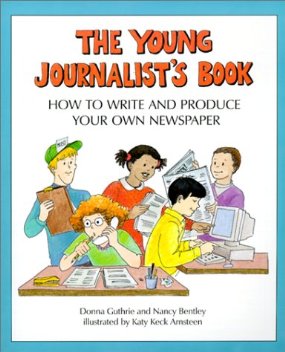
Young Journalist’s Book: How to Write and Produce Your Own Newspaper

CBS anchor Scott Pelley said at a speech at Quinnipiac University that journalists “are getting big stories wrong, over and over again,” as quoted by a commenter on The Idaho State Journal politics blog.
514J0T38H9L._SX285_Young Journalist’s Book: How to Write and Produce Your Own Newspaper, is a great place to help children begin learn the difference between good and bad journalism.
The book is a step-by-step guide that explains what a journalist does, what makes an interesting story, and how newspapers differ from books. Students learn about gathering facts, writing a story, proofreading, designing layout, printing, and distributing their newspaper. There are frequent references to using computers in the process. The authors describe the different types of stories, e.g., news, features, and editorials, with hints on how to write each one and suggestions for topics. This title is similar in format to Guthrie and Bentley’s The Young Author’s Do-It Yourself Book (1994) and The Young Producer’s Video Book (1995, both Millbrook). The full-color cartoons are appealing. Inspirational, practical fare for writers and would-be reporters.-Marion F. Gallivan, Gannon University, Erie, PA
E How talks about the steps to establishing a newspaper at your elementary school. They include:
Brainstorm possible newspaper names and story ideas with your newspaper staff. Articles can be about school-wide news, book reviews, movie reviews and more.

Assign articles to your students. Warn them about the dangers of plagiarism and explain the term to your students. Provide them with a deadline for their articles. Make the deadline reasonable. Since they are elementary school students, they will probably need at least a couple of weeks to complete their articles.

Decide whether you will type the articles into a word processing document or whether you will leave this task up to your staff. Some students know how to type quickly while others haven’t learned keyboarding yet. Be sure you run spell check and proofread the articles.

The Juice Box Bully: Empowering Kids to Stand Up For Others … plus other books and resources

51LPEX+pM7L._SX260_“Every child deserves the opportunity to have a successful early learning experience, which is the foundation for becoming a lifelong learner,” writes Bob Sornson, PhD, author of The Juice Box Bully: Empowering Kids to Stand Up For Others. “My work with the Early Learning Foundation is all about helping parents and schools be more effective building the skills and behaviors that help kids be successful.”
Juice Box Bully is part of my effort to teach kids to stand up and speak up for themselves and others, build healthy classroom and school cultures, and make the world a better place! Only by building safe and connected cultures will we get rid of the bullying behaviors that harm children. Punishing bullies is not enough. We must teach our children a better way.

9781907755774_p0_v1_s260x420Have you ever seen a bully in action and done nothing about it? In Juice Box Bully, the kids at Pete’s new school get involved, instead of being bystanders. When Pete begins to behave badly, his classmates teach him about “The Promise”. Will Pete decide to shed his bullying habits and make “The Promise”?
Bullying behaviour comes in many shapes and sizes, and being bullied in childhood can have lifelong effects, according to author Dr Sabina Dosani in Bullying (52 Brilliant Ideas) to Keep Your Child safe and Happy. Recent UK research indicates that 1 in 4 primary school children and 1 in 10 secondary school children are bullied at least once a term. Bullying makes children lonely, unhappy and frightened. Tackling bullying and its side-effects can be a very delicate business, and each case is unique. Often parents don’t know anything is wrong until events overtake them, or they can’t think of the best way to help their child survive the experience. Being armed with the right information about bullying, recognising the symptoms to look out for, and knowing effective ways of breaking the cycle of abuse can be crucial factors in ensuring your child deals with their tormentors in a calm, positive and proactive way. In Bullying Dr Sabina Dosani has put together 52 brilliant ideas to enable parents to help their children survive being bullied and become stronger and more confident people as a result. Including advice on identifying different types of bully, clever tips for not reacting to taunts, self-defence ideas for increased confidence and methods to take the wind out of a bully’s sails, Bullying will help you to help your child find their own empowering way to take control of the situation and rid themselves of the fear that being bullied can bring. In Bullying Dr. Sabina Dosani has put together 52 brilliant ideas to enable parents to help their children survive being bullied and become stronger and more confident people as a result.

In Tease Monster: A Book About Teasing Vs. Bullying (Building Relationships), when One-of-a-Kind”is laughed at by Purple for being weird and Green playfully calls One a klutz after tripping on the stairs, is the Tease Monster to blame? With words of wisdom from Mom about the Tease Monster, One discovers that teasing is part of life. And not all teasing is the same. One learns that laughing at someone (mean teasing)has a hurtful bite, but laughing with someone is alright when it’s not done out of spite. This the newest book in the Building Relationships series by Julia Cook.
612ClmMZPLL._SX260_Author Julia Cook has a phenomenal gift of writing books for children! Her books teach important life skills and are written through a child’s view of the world,” wrote Erin E. Bowden, M.S., Elementary School Counselor.
As an Elementary School Counselor, I have incorporated many of Julia’s books into my curriculum and must say Tease Monster is a powerful relationship-building tool. Children will quickly learn the power of words, how people hear things in different ways, and the importance of laughing with someone not at them. Tease Monster should certainly find its way onto your bookshelf if you’re a parent, school counselor, teacher, social worker, psychologist, or pediatrician.
*****
Social issues: About one fourth of all students from elementary age through high school are the victims of bullying and harassment while on school property because of their race, ethnicity, gender, disability, religion or sexual orientation. Unfortunately the primary reason for bullying is due to something that may set themselves apart from the norm.
According to recent statistics, ‘gay and lesbian teens are two to three times as more likely to commit teen suicide than other youths.’ The Bullying Statistics website continues:
About 30 percent of all completed suicides have been related to sexual identity crisis. Students who also fall into the gay, bisexual, lesbian or transgendered identity groups report being five times as more likely to miss school because they feel unsafe after being bullied due to their sexual orientation. About 28 percent out of those groups feel forced to drop out of school altogether. Although more and more schools are working to crack down on problems with bullying, teens are still continuing to bully each other due to sexual orientation and other factors. 
In a … survey about gay bullying statistics, teens reported that the number two reason they are bullied is because of their actual or perceived sexual orientation or gender expression. The number one reason reported was because of appearance. Teens are at a pivotal point in their young adult lives when they are trying to find out who they are and who they are about to become as adults. This is why being teased, bullied and harassed is something that could negatively affect a person’s self-esteem and view of themselves for the rest of their life.
In fact, about 9 out of 10 LGBT teens have reported being bullied at school within the past year because of their sexual orientation, according to the most recent gay bullying statistics. Out of those numbers, almost half have reported being physically harassed followed by another quarter who reported actually being physically assaulted.  Unfortunately most teens who experience bullying of any kind are reluctant to share their experience or report the incident to a teacher or trusted adult. Even more unfortunate are the gay statistics that report a lack of response among those teachers and school administration. According to a recent statistic, out of the students that did report a harassment or bullying situation because of their sexuality, about one third of the school staff didn’t do anything to resolve the issue.
Here are some other numbers:
  • About 42 percent of kids have been bullied while online with one in four being verbally attacked more than once.
  • About 35 percent of kids have been threatened online.
  • About 58 percent of kids and teens have reported that something mean has been said about them or to them online.
  • Other bullying statistics show that about 77 percent of students have admitted to being the victim of one type of bullying or another.
  • The American Justice Department bullying statistics show that one out of ever 4 kids will be bullied sometime throughout their adolescence.
  • 46 percent of males followed by 26 percent of females have admitted to being victims in physical fights as reported in one report of bullying statistics by the Bureau of Justice School.
Other bullying facts:
  • As these bullying statistics indicate, bullying is just getting worse in American schools. Many studies have shown that increasing domestic violence at home are leading to an increase in bullying online and at school.
  • Researchers note that one way to help begin to lower these bullying statistics is to tell an adult when it is happening.
  • According to the i-Safe American survey of students bullying statistics, about 58 percent of kids admit to never telling an adult when they’ve been the victim of a bullying attack.
  • Another way to stay safe from bullies is to inform the school if the attacks are taking place on school property or have something to do with the school.
  • Ignore messages sent by cyber bullies.
See also: Bullying 101: The Facts About Bullying, by E.M. Lemus. Are you tired of sitting idly by while bullying becomes more and more frequent in the lives of our young people? The statistics around bullying are staggering. This book will provide information that you need to stop being a bystander and become a key player in helping to end the bully cycle. Learn about the different types of bullying, how to identify it and the laws that currently surround this epidemic by becoming a part of the revolution that says enough is enough.
As an added bonus, the last chapter will give you specific information regarding your state’s laws and what actions they are taking, if any, to combat this issue.

Saturday, August 17, 2013

The Common Core: Teaching K-5 Students to Meet the Reading Standards

Click on the image to read more
This essential resource, The Common Core: Teaching K-5 Students to Meet the Reading Standards,  explains the key points of the CCSS reading standards, then aligns each Standard with appropriate research-based strategies, and shows you how to use those strategies to teach your students. Classroom applications and student examples will make this your go to CCSS resource.
The International Reading Association is the world’s premier organization of literacy professionals. Our titles promote reading by providing professional development to continuously advance the quality of literacy instruction and research.

Research-based, classroom-tested, and peer-reviewed, IRA titles are among the highest quality tools that help literacy professionals do their jobs better.

RELATED READING:  Teaching the Common Core Math Standards with Hands-On Activities, Grades 6-8
Helpful advice for teaching Common Core Math Standards to middle-school studentsThe new Common Core State Standards for Mathematics have been formulated to provide students with instruction that will help them acquire a thorough knowledge of math at their grade level, which will in turn enable them to move on to higher mathematics with competence and confidence. Hands-on Activities for Teaching the Common Core Math Standards is designed to help teachers instruct their students so that they will better understand and apply the skills outlined in the Standards. This important resource also gives teachers a wealth of tools and activities that can encourage students to think critically, use mathematical reasoning, and employ various problem-solving strategies.
  • Filled with activities that will help students gain an understanding of math concepts and skills correlated to the Common Core State Math Standards
  • Offers guidance for helping students apply their understanding of math concepts and skills, develop proficiency in calculations, and learn to think abstractly
  • Describes ways to get students to collaborate with other students, utilize technology, communicate ideas about math both orally and in writing, and gain an appreciation of the significance of mathematics to real life
This practical and easy-to-use resource will help teachers give students the foundation they need for success in higher mathematics.

Click on image to read more

Click on image to read more
Some of the many areas by this series of books addressed include:
-Comprehension
-Response To Intervention/Struggling Readers
-Early Literacy
-Adolescent Literacy
-Assessment
-Literacy Coaching
-Research And Policy
An amazon review said:
As a reading specialist and a member of the ELA Common Core committee for grades 5-6, I am looking for more information and resources to help roll out Common Core. This resource gives a detailed explanation of CC, and a breakdown of the skills the students need to master by the end of the year as well as activities and strategies to use in the classroom for each of the strategies. It also gives you plenty of ideas to incorporate some of the other CC standards so that you are not just teaching one standard but a number of them. I can’t wait for the grade 6-12 edition to come out! I have purchased a number of resources and none of them come close to containing the information and suggestions that this one does. Common Core is hard enough to wrap your mind around but I have a much clearer idea of what it is now and what we need to incorporate and how to do it! It truly is a must have.

Four Twitter ideas for teaching concise writing, a FREE Ebook and other resources

51o5ZOaJwdLHere are some activities that I will use in my 10th and 11th grade creative writing class this summer for TRIO/Upward Bound.

The strategies  teach concise writing and are based on Twitter. However, the ideas can easily be adapted for other platforms including Facebook status updates or text messages.

SOURCE: Less Is More: Using Social Media to Inspire Concise Writing
1) Personal Writing: Students write a series of Twitter-esque personal “essays” (140 characters maximum, including spaces and punctuation). Topic ideas include the school year, life lessons, relationships and personal goals. Each one can be stand-alone, or each post can be part of a series. They might do this, for example, for personal writing or in the context of developing college essay ideas. They then develop one or more selected posts into a longer piece. Afterward, debrief: How did starting off by writing brief expressions of their ideas contribute to their writing process?
WRITE GOOD OR DIE IS A FREE EBOOK that gives survival tips for 21st century writers, from best-selling authors Kevin J. Anderson, M.J. Rose, Heather Graham, J.A. Konrath, Gayle Lynds, Alexandra Sokoloff, Jonathan Maberry, and more. How to develop your craft, improve your writing, get an agent, promote your work, embrace the digital age, and prepare yourself for the coming changes in the publishing industry. Edited by Scott Nicholson. Other contributors include Elizabeth Massie, Harley Jane Kozak, Douglas Clegg, Brandon Massey, Mur Lafferty, Dean Wesley Smith, David J. Montgomery, Kristine Kathryn Rusch, Robert Kroese, and Adrienne Jones. Covering art, craft, and business. All proceeds benefit the non-profit organization Literacy Inc., which promotes reading among teens.
2) Authentic Writing: Taking a page from Andy Selsberg, students find ways to contribute meaningfully and authentically to the world of the Web. Ideas include, as Mr. Selsberg suggests, writing descriptions to “sell” an item of used clothing on eBay, commenting on a YouTube video or contributing a product review on a site like Amazon, as well as participating in our daily Student Opinion discussions. Establish guidelines for good Web citizenship. Have students read each other’s posts and provide helpful feedback. How was this activity different from writing academic essays that only the teacher reads?

3) Poetry: Students read the Twitter poems by Billy Collins, Claudia Rankine, Elizabeth Alexander and Robert Pinsky. They then write their own original “Twitter poems” or rewrite a classic poem or one of their own poems in 140 characters or fewer. They can also look further into the history and impact of brief poems, like Ezra Pound’s “In a Station of the Metro” and William Carlos Williams’s “So Much Depends.”

4) Creative Writing: Students write pieces inspired by so-called Twitter novels and cellphone novels, either by writing the equivalent of an original story or novella 140 characters at a time, or by “crowd-sourcing” the work, by having each student contribute a line, in turn, to a class novel.
_______