Showing posts with label concepts. Show all posts

Monday, October 7, 2013

Idaho’s students are ready for higher academic expectations

by Tom Luna

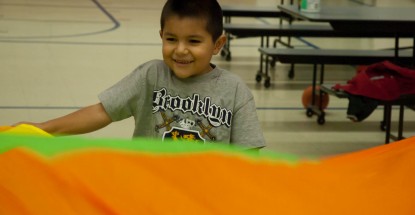
Source: College of Western Idaho Early Childhood Education program
As students across Idaho are heading back to school, the results from last year are in — and it’s great news. Our schools continue to exceed expectations.

This is the second year of the Five-Star Rating System, a system of increased accountability that uses multiple measures to evaluate the hard work of our teachers and students across the state.

The most recent results not only show a majority of Idaho schools are high-performing but also that a vast majority of students are performing at or above grade level in reading and mathematics.
This past year, 90 percent of Idaho students performed at or above grade level in reading. More than 81 percent performed at that level in mathematics. Students have shown growth, especially in the number of advanced students, from just a few years ago.
RELATED READING: This essential resource, The Common Core: Teaching K-5 Students to Meet the Reading Standards, explains the key points of the CCSS reading standards, then aligns each Standard with appropriate research-based strategies, and shows you how to use those strategies to teach your students. Classroom applications and student examples will make this your go to CCSS resource.The International Reading Association is the world’s premier organization of literacy professionals. Our titles promote reading by providing professional development to continuously advance the quality of literacy instruction and research.
FURTHER READING: Teaching the Common Core Math Standards with Hands-On Activities, Grades 6-8
While I praise these results, I also know the reality behind this data: While students are performing better than ever in K-12, they continue to struggle after high school.

Eighty percent of students are at or above grade level when they graduate, yet just a few months later, students show up at postsecondary education, and nearly half qualify for remedial courses.
This tells us our standards in K-12 education have been too low. Idaho’s kids are ready for higher expectations.

We are moving toward that this school year. In 2011, Idaho adopted the Common Core State Standards as Idaho’s Core Standards in mathematics and English language arts. They will first be implemented across grades K-12 this fall.
We know Idaho students will rise to the occasion. They’ve done it before.

Idaho first implemented academic standards in 2002. Back then, we didn’t see half of Idaho’s students advanced in reading right away.

It took us several years to get here. It will be the same with these higher standards.
In 2015, the first year we administer the new assessment aligned to Idaho Core Standards, we know not as many students will perform at grade level. In fact, we expect the number to drop by about one-third.

That’s not a bad thing. These standards are considerably higher. This new data will help teachers guide instruction in the classroom and get students to where they need to be before graduation.
What’s critical is that, by meeting these new standards, every child will graduate from high school prepared to go on to college, community college, professional-technical education or the workforce without the need for remediation. We may be far from this goal today, but we know it is within our reach.

SDE logoMany Idahoans — from parents and teachers to the business community — have already voiced their strong support for these new standards.
They want to challenge Idaho students today, through problem-solving and critical-thinking skills, so they are prepared for the world that awaits them after high school.

Transitioning to these higher standards will be hard work in the initial years, but we all recognize it is the best thing for Idaho’s students and the future of our great state.

* Tom Luna is Idaho Superintendent of Public Instruction.

Racism Takes a Toll on Kids’ Mental Health

“We know that children who experience poor health and well-being are less likely to engage in education, employment and other activities that support them to lead healthy and productive lives, and to participate meaningfully in the community. – Naomi Priest
65326Most adults and they can probably recount an instance of blatant or subversive racism. Equipped with life experiences and coping mechanisms, most adults are able to deal with racism in healthy ways that are not destructive.

A new study is suggesting that the youngest victims of racism may have a difficult time understanding and processing someone disliking or even hating them because of the color of their skin.
Racism, also sometimes called racialism, is generally defined as actions, practices, or beliefs that consider the human species to be divided into races with shared traits, abilities, or qualities, such as personality, intellect, morality, or other cultural behavioral characteristics, and especially the belief that races can be ranked as inherently superior or inferior to others, or that members of different races should be treated differently.

The exact definition of racism is controversial both because there is little scholarly agreement about the meaning of the concept “race”, and because there is also little agreement about what does and doesn’t constitute discrimination. Critics argue that the term is applied differentially, with a focus on such prejudices by whites, and defining mere observations of racial differences as racism.

On the flip side, some sociologists have defined racism as a system of group privilege. In Portraits of White Racism, David Wellman has defined racism as “culturally sanctioned beliefs, which, regardless of intentions involved, defend the advantages whites have because of the subordinated position of racial minorities”. Challenging the notion that racism consists simply of prejudice in the minds of individuals, this book argues instead that racism is a set of culturally acceptable beliefs that defend the advantages whites have obtained in American society.

In the same vein, sociologists Noël A. Cazenave and Darlene Alvarez Maddern wrote an article called “Defending the White Race: White Male Faculty Opposition to a White Racism Course” in the journal Race and Society. In it, they  define racism as “…a highly organized system of ‘race’-based group privilege that operates at every level of society and is held together by a sophisticated ideology of color/’race’ supremacy.

Racist systems include, but cannot be reduced to, racial bigotry. Sociologist and former American Sociological Association president Joe Feagin argues that the United States can be characterized as a “total racist society.”

Recent research shows that racism takes a toll on kids’ mental health.  Most of the racism experienced by children and teens involved discrimination by other people, rather than institutional or systemic racism, according to the findings.
The review also revealed an increased risk of poorer birth outcomes among children whose mothers experienced racism during pregnancy.
Most of the studies included in the review were conducted in the United States with participants aged 12 to 18. Of the racial/ethnic groups included in the studies, the three most common were blacks, Hispanics and Asians.
“We know that children who experience poor health and well-being are less likely to engage in education, employment and other activities that support them to lead healthy and productive lives, and to participate meaningfully in the community,” lead researcher Naomi Priest, of the University of Melbourne in Australia, said.

“Traditional” American Culture: Benign and Wholesome or Inherently Racist? says:
Police harassment and brutality directed at black men, women, and children are as old as American society, dating back to the days of slavery and Jim Crow segregation. Such police actions across the nation today reveal important aspects of . . . the commonplace discriminatory practices of individual whites . . . [and] white dominated institutions that allow or encourage such practices.
Racism in the form of discrimination infests society today. A case in point is that blacks have traditionally suffered from higher rates of unemployment than whites. In June 2009, black unemployment was 15.3 % compared to an 8.8% unemployment rate for whites. Do blacks simply not take the initiative that whites do to find work? Studies indicate that, in actuality, discrimination likely contributes to the black-white unemployment gap.

In 2003, researchers at the University of Chicago and MIT released a study involving 5,000 fake resumes that found that 10% of those featuring “Caucasian-sounding” names were called back compared to just 6.7% of those featuring “black-sounding” names. Moreover, resumes featuring names such as Tamika and Aisha were called back just 5% and 2% of the time. The skill-level of the faux black candidates made no impact on callback rates.

Moving toward solutions
In a Other People’s Children: Cultural Conflict in the Classroom,    a radical analysis of contemporary classrooms, MacArthur Award–winning author Lisa Delpit develops ideas about ways teachers can be better “cultural transmitters” in the classroom, where prejudice, stereotypes, and cultural assumptions breed ineffective education. Delpit suggests that many academic problems attributed to children of color are actually the result of miscommunication, as primarily white teachers and “other people’s children” struggle with the imbalance of power and the dynamics plaguing our system.

Other People’s Children is a must-read for teachers, administrators, and parents striving to improve the quality of America’s education system. The book is is a paradigm-shifting, highly acclaimed exploration of the cultural slippage between white teachers and students of color.

“This reminds us that parents need to be sure that their children are getting valuable and self-affirming messages outside of the school system, which sometimes hurts them more than helps them,” said Dr. Boyce Watkins, author of The 8 Principles of Black Male Empowerment. “Our children sometimes find themselves so spiritually degraded that they in turn become intellectually crippled for life. We cannot accept this outcome.”

Dr. Watkins recommends that all parents teach their children outside of school and also give them lessons that strengthen their self-esteem. He says that parents should take their children online and have them write short reports on Black historical figures and events, as well as read biographies of successful African Americans.

Wednesday, September 25, 2013

Group strives to wipe out Kenyan poverty

521ae51ec0b71.preview-300BOISE — Caring Hearts and Hands of Hope is a Boise-based organization that wants to eradicate poverty in Kenya by helping orphans, children of widows and those from abject poverty with high school tuition costs, the Idaho Press Tribune reports.
Today in Kenya, 56 percent of the people earn less than a dollar a day. Natural disasters, especially famines, are common in traditional farming areas where survival depends on rainfall and good weather. People in these areas become dependent on relief food, mostly from non-governmental organizations, the article states.

Idaho Press-Tribune: What is your organization’s goal and how do you accomplish it?

Caring Hearts and Hands of Hope: The problems of poverty and famine in Kenya are compounded by the effects of HIV/AIDS. Over one million children are orphans due to AIDS. This has led to the increased number of children having no one at all to care for them. When both parents die, their future is lost.
Elementary school education is free in Kenya, but children who pass the national eighth grade exams to join high school must pay tuition. Unfortunately, thousands of needy boys and girls cannot amass the necessary funds. Thus boys do easily turn to a life of crime, drugs or alcohol while girls are in danger of turning into prostitution or being forced to early marriage.
Providing handouts is a short-sighted approach. Educating the youth is a long-term solution that will create a nation of educated professional contributors.
CONTRIBUTE TO CARING HEARTS AND HANDS OF HOPE
To help, please mail a check to Caring Hearts and Hands of Hope Inc. (any amount helps), P.O. Box 7152, Boise, 83707, or donate online at www.caringheartsandhandsofhope.com. You can have Caring Hearts and Hands of Hope President Dr. Vincent Kituku come speak at your organization or school by calling 376-8724.
**********************************************************************************************************
Related Reading: Books for Kids about Kenya and by Kenyan Authors.
The list author says: “Books are a great way to introduce young children to a new adventure and get teens and tweens ready for a family trip. We’ve compiled a list of books about Kenya and by Kenyan authors for children of various ages and with varying interests. What better why to begin a journey than a trip through literature?”

One great sample from this list is Bringing the Rain to Kapiti Plain (Reading Rainbow Books). by Verna Aardema.

An amazon reviewer wrote:
Bringing-the-Rain-to-Kapiti-PlainI really love the book “Bringing The Rain to Kapiti Plain,” by Verna Aardema. I have enjoyed it so much that I am planning to give it as a gift to my sister who has two young children, ages 4 and 7. This is a simple story about a cattle herdsman and his wish for rain on the African plain. The narrative structure of the story is based on a sequence of events that builds suspense and interest in children until the end of the story. This is a memorable story; it is very simple to understand and has a powerful musical quality that, as a young adult, I enjoy reading aloud. The rhymes and rhythms are so strong that all young children will be wide eyed with suspense and interest until the very end of the story. I particularly enjoyed one line where the author rhymes “fat” and “Ki-pat”: “So the grass grew green/ And the cattle fat!/ And Ki-pat got a wife/ And a little Ki-pat-.” This story is suitable for young children because its tone is happy. It deals with the relationship of humans with water, plants and animals. … From this book … they will learn about the connection between humans and nature by enjoying the colored pictures. The pictures are so vibrant that it is easy to imagine the world of Ki-pat. As an adult, I enjoy this book because it describes the cycle of life in a very interesting way. Readers of all ages will see that human life is totally dependent upon nature, and the existence of human beings without nature is nearly impossible. Readers will also learn how the lives of humans and animals are dependent on rain; people and animals need each other and every part of nature for their perfect existence. I highly recommend Verna Aardema’s “Bringing the Rain to Kapiti Plain” to anyone who has young children and is looking for a book that illustrates the relationship between nature and human beings. The colorful, detailed pictures will keep the children interested while they are learning about the connection between nature and human beings.

The Juice Box Bully: Empowering Kids to Stand Up For Others … plus other books and resources

51LPEX+pM7L._SX260_“Every child deserves the opportunity to have a successful early learning experience, which is the foundation for becoming a lifelong learner,” writes Bob Sornson, PhD, author of The Juice Box Bully: Empowering Kids to Stand Up For Others. “My work with the Early Learning Foundation is all about helping parents and schools be more effective building the skills and behaviors that help kids be successful.”
Juice Box Bully is part of my effort to teach kids to stand up and speak up for themselves and others, build healthy classroom and school cultures, and make the world a better place! Only by building safe and connected cultures will we get rid of the bullying behaviors that harm children. Punishing bullies is not enough. We must teach our children a better way.

9781907755774_p0_v1_s260x420Have you ever seen a bully in action and done nothing about it? In Juice Box Bully, the kids at Pete’s new school get involved, instead of being bystanders. When Pete begins to behave badly, his classmates teach him about “The Promise”. Will Pete decide to shed his bullying habits and make “The Promise”?
Bullying behaviour comes in many shapes and sizes, and being bullied in childhood can have lifelong effects, according to author Dr Sabina Dosani in Bullying (52 Brilliant Ideas) to Keep Your Child safe and Happy. Recent UK research indicates that 1 in 4 primary school children and 1 in 10 secondary school children are bullied at least once a term. Bullying makes children lonely, unhappy and frightened. Tackling bullying and its side-effects can be a very delicate business, and each case is unique. Often parents don’t know anything is wrong until events overtake them, or they can’t think of the best way to help their child survive the experience. Being armed with the right information about bullying, recognising the symptoms to look out for, and knowing effective ways of breaking the cycle of abuse can be crucial factors in ensuring your child deals with their tormentors in a calm, positive and proactive way. In Bullying Dr Sabina Dosani has put together 52 brilliant ideas to enable parents to help their children survive being bullied and become stronger and more confident people as a result. Including advice on identifying different types of bully, clever tips for not reacting to taunts, self-defence ideas for increased confidence and methods to take the wind out of a bully’s sails, Bullying will help you to help your child find their own empowering way to take control of the situation and rid themselves of the fear that being bullied can bring. In Bullying Dr. Sabina Dosani has put together 52 brilliant ideas to enable parents to help their children survive being bullied and become stronger and more confident people as a result.

In Tease Monster: A Book About Teasing Vs. Bullying (Building Relationships), when One-of-a-Kind”is laughed at by Purple for being weird and Green playfully calls One a klutz after tripping on the stairs, is the Tease Monster to blame? With words of wisdom from Mom about the Tease Monster, One discovers that teasing is part of life. And not all teasing is the same. One learns that laughing at someone (mean teasing)has a hurtful bite, but laughing with someone is alright when it’s not done out of spite. This the newest book in the Building Relationships series by Julia Cook.
612ClmMZPLL._SX260_Author Julia Cook has a phenomenal gift of writing books for children! Her books teach important life skills and are written through a child’s view of the world,” wrote Erin E. Bowden, M.S., Elementary School Counselor.
As an Elementary School Counselor, I have incorporated many of Julia’s books into my curriculum and must say Tease Monster is a powerful relationship-building tool. Children will quickly learn the power of words, how people hear things in different ways, and the importance of laughing with someone not at them. Tease Monster should certainly find its way onto your bookshelf if you’re a parent, school counselor, teacher, social worker, psychologist, or pediatrician.
*****
Social issues: About one fourth of all students from elementary age through high school are the victims of bullying and harassment while on school property because of their race, ethnicity, gender, disability, religion or sexual orientation. Unfortunately the primary reason for bullying is due to something that may set themselves apart from the norm.
According to recent statistics, ‘gay and lesbian teens are two to three times as more likely to commit teen suicide than other youths.’ The Bullying Statistics website continues:
About 30 percent of all completed suicides have been related to sexual identity crisis. Students who also fall into the gay, bisexual, lesbian or transgendered identity groups report being five times as more likely to miss school because they feel unsafe after being bullied due to their sexual orientation. About 28 percent out of those groups feel forced to drop out of school altogether. Although more and more schools are working to crack down on problems with bullying, teens are still continuing to bully each other due to sexual orientation and other factors. 
In a … survey about gay bullying statistics, teens reported that the number two reason they are bullied is because of their actual or perceived sexual orientation or gender expression. The number one reason reported was because of appearance. Teens are at a pivotal point in their young adult lives when they are trying to find out who they are and who they are about to become as adults. This is why being teased, bullied and harassed is something that could negatively affect a person’s self-esteem and view of themselves for the rest of their life.
In fact, about 9 out of 10 LGBT teens have reported being bullied at school within the past year because of their sexual orientation, according to the most recent gay bullying statistics. Out of those numbers, almost half have reported being physically harassed followed by another quarter who reported actually being physically assaulted.  Unfortunately most teens who experience bullying of any kind are reluctant to share their experience or report the incident to a teacher or trusted adult. Even more unfortunate are the gay statistics that report a lack of response among those teachers and school administration. According to a recent statistic, out of the students that did report a harassment or bullying situation because of their sexuality, about one third of the school staff didn’t do anything to resolve the issue.
Here are some other numbers:
  • About 42 percent of kids have been bullied while online with one in four being verbally attacked more than once.
  • About 35 percent of kids have been threatened online.
  • About 58 percent of kids and teens have reported that something mean has been said about them or to them online.
  • Other bullying statistics show that about 77 percent of students have admitted to being the victim of one type of bullying or another.
  • The American Justice Department bullying statistics show that one out of ever 4 kids will be bullied sometime throughout their adolescence.
  • 46 percent of males followed by 26 percent of females have admitted to being victims in physical fights as reported in one report of bullying statistics by the Bureau of Justice School.
Other bullying facts:
  • As these bullying statistics indicate, bullying is just getting worse in American schools. Many studies have shown that increasing domestic violence at home are leading to an increase in bullying online and at school.
  • Researchers note that one way to help begin to lower these bullying statistics is to tell an adult when it is happening.
  • According to the i-Safe American survey of students bullying statistics, about 58 percent of kids admit to never telling an adult when they’ve been the victim of a bullying attack.
  • Another way to stay safe from bullies is to inform the school if the attacks are taking place on school property or have something to do with the school.
  • Ignore messages sent by cyber bullies.
See also: Bullying 101: The Facts About Bullying, by E.M. Lemus. Are you tired of sitting idly by while bullying becomes more and more frequent in the lives of our young people? The statistics around bullying are staggering. This book will provide information that you need to stop being a bystander and become a key player in helping to end the bully cycle. Learn about the different types of bullying, how to identify it and the laws that currently surround this epidemic by becoming a part of the revolution that says enough is enough.
As an added bonus, the last chapter will give you specific information regarding your state’s laws and what actions they are taking, if any, to combat this issue.

Saturday, August 17, 2013

The Common Core: Teaching K-5 Students to Meet the Reading Standards

Click on the image to read more
This essential resource, The Common Core: Teaching K-5 Students to Meet the Reading Standards,  explains the key points of the CCSS reading standards, then aligns each Standard with appropriate research-based strategies, and shows you how to use those strategies to teach your students. Classroom applications and student examples will make this your go to CCSS resource.
The International Reading Association is the world’s premier organization of literacy professionals. Our titles promote reading by providing professional development to continuously advance the quality of literacy instruction and research.

Research-based, classroom-tested, and peer-reviewed, IRA titles are among the highest quality tools that help literacy professionals do their jobs better.

RELATED READING:  Teaching the Common Core Math Standards with Hands-On Activities, Grades 6-8
Helpful advice for teaching Common Core Math Standards to middle-school studentsThe new Common Core State Standards for Mathematics have been formulated to provide students with instruction that will help them acquire a thorough knowledge of math at their grade level, which will in turn enable them to move on to higher mathematics with competence and confidence. Hands-on Activities for Teaching the Common Core Math Standards is designed to help teachers instruct their students so that they will better understand and apply the skills outlined in the Standards. This important resource also gives teachers a wealth of tools and activities that can encourage students to think critically, use mathematical reasoning, and employ various problem-solving strategies.
  • Filled with activities that will help students gain an understanding of math concepts and skills correlated to the Common Core State Math Standards
  • Offers guidance for helping students apply their understanding of math concepts and skills, develop proficiency in calculations, and learn to think abstractly
  • Describes ways to get students to collaborate with other students, utilize technology, communicate ideas about math both orally and in writing, and gain an appreciation of the significance of mathematics to real life
This practical and easy-to-use resource will help teachers give students the foundation they need for success in higher mathematics.

Click on image to read more

Click on image to read more
Some of the many areas by this series of books addressed include:
-Comprehension
-Response To Intervention/Struggling Readers
-Early Literacy
-Adolescent Literacy
-Assessment
-Literacy Coaching
-Research And Policy
An amazon review said:
As a reading specialist and a member of the ELA Common Core committee for grades 5-6, I am looking for more information and resources to help roll out Common Core. This resource gives a detailed explanation of CC, and a breakdown of the skills the students need to master by the end of the year as well as activities and strategies to use in the classroom for each of the strategies. It also gives you plenty of ideas to incorporate some of the other CC standards so that you are not just teaching one standard but a number of them. I can’t wait for the grade 6-12 edition to come out! I have purchased a number of resources and none of them come close to containing the information and suggestions that this one does. Common Core is hard enough to wrap your mind around but I have a much clearer idea of what it is now and what we need to incorporate and how to do it! It truly is a must have.