 This is a repost of an article I wrote in 2006 that appeared in the Idaho State Journal.
I was recently inspired by a day of substitute teaching at the
Pocatello Community Charter School. That morning in the parking lot, I
ran into Marjanna Hulet, one of the school’s founders, as I made my way
to the office.
__
What are you doing here? she said. Marjanna, who visits the school regularly, is demonstrating the spirit of inquiry this sunny morning, I thought to myself.
After a tour of the facility for myself, my wife, and our daughters, my thinking moved toward the elements that make popular schools like this one so beneficial for children.
I was recently inspired by a day of substitute teaching at the Pocatello Community Charter School. That morning in the parking lot, I ran into Marjanna Hulet, one of the school’s founders, as I made my way to the office.
-
What are you doing here? she said. Marjanna, who visits the school regularly, is demonstrating the spirit of inquiry this sunny morning, I thought to myself. After a tour of the facility for myself, my wife, and our daughters, my thinking moved toward the elements that make popular schools like this one so beneficial for children. What is the single most important approach to teaching that makes a difference in how well learners succeed? In the book “Classroom Discourse: The Language of Teaching and Learning,” Courtney Cazden defines this key strategy as scaffolded instruction.
-
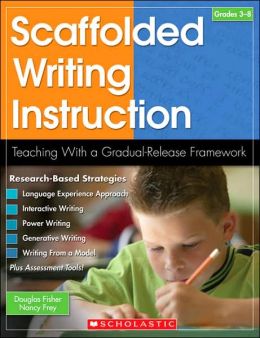
Scaffolding, she says, is the process in which the learner participates in the full performance of a given activity to the degree to which he or she is capable. The adult provides the “helping hand.” As the learner gains competence, the teacher gradually increases expectations of how much of the full performance the child can be responsible for. When teachers scaffold students’ learning, they begin by exposing children to the task through modeling and providing examples. Gradually, students are invited to take part in the process although minimally at first. Students may work with partners or in small groups as they take more and more responsibility for the task. They are helped to solve problems and to focus on specific strategies related to what they are learning while gaining competence in the task.
Gradually, they move toward independence, applying what they know to similar but new situations. With independence, students are guided to think and talk about what they are now able to do.
Below is a summary of the process of applying strategic scaffolding to writing in a particular form, such as a memoir or poetry. At the Pocatello Community Charter School, I was able to participate in Whitney Griggs’ early elementary multiage classroom, where we engaged students in many similar strategies, from writing together to writing alone.
Griggs began with Immersion and then Exploration. During Immersion, students are exposed to the forms under study as they listen and respond to examples read aloud and share examples they discover on their own. Throughout the sharing, students are encouraged to notice patterns and similarities and to decide what makes this particular form unique.
They observe, reflect, and discuss. This exploration of the form helps students crystallize their ideas. Experimentation begins with the teacher modeling the form as a “think aloud” demonstration for the children. During a think-aloud, the teacher actually writes while saying aloud everything that is going on inside his or her head: “I think I’ll choose rain as my topic. When I think of rain, I think of wet, soggy, shiny. It cleans the streets,” and so on. The teacher generates ideas, organizes and changes them out loud as if the children were not present.
Think alouds are useful because they provide a window into how a skilled writer thinks and what the teacher is eventually going to ask students to do on their own.
“We strive to create a culture of quality at the Pocatello Community Charter School,” said Dr. Martha B. Martin, the school’s dean. “Since we have a portfolio assessment system at this school, we have a lot of conversations about ‘portfolio quality.’ Our crew leaders have to teach children what quality is, and we do this through modeling and the use of exemplars.”
“Students begin to understand that if they are going to do something, they should do it well,” Martin continued. “They begin to recognize signs of quality in their own work and that of their classmates. When you create a culture of quality at school, members of that learning community are able to critique each other’s work and help one another revise and edit. The process is slow, messy and cumbersome, but the result is portfolio quality products that help children understand what they are truly capable of creating.”
Writing articles like this one helps me to reflect and analyze inquiries such as Marjanna Hulet’s “what are you doing here?” at the Pocatello Community Charter School. There, I am experiencing the thrill of teaching and learning in an atmosphere that is truly empowering for young people.
__
What are you doing here? she said. Marjanna, who visits the school regularly, is demonstrating the spirit of inquiry this sunny morning, I thought to myself.
After a tour of the facility for myself, my wife, and our daughters, my thinking moved toward the elements that make popular schools like this one so beneficial for children.
I was recently inspired by a day of substitute teaching at the Pocatello Community Charter School. That morning in the parking lot, I ran into Marjanna Hulet, one of the school’s founders, as I made my way to the office.
-
What are you doing here? she said. Marjanna, who visits the school regularly, is demonstrating the spirit of inquiry this sunny morning, I thought to myself. After a tour of the facility for myself, my wife, and our daughters, my thinking moved toward the elements that make popular schools like this one so beneficial for children. What is the single most important approach to teaching that makes a difference in how well learners succeed? In the book “Classroom Discourse: The Language of Teaching and Learning,” Courtney Cazden defines this key strategy as scaffolded instruction.
-
Scaffolding, she says, is the process in which the learner participates in the full performance of a given activity to the degree to which he or she is capable. The adult provides the “helping hand.” As the learner gains competence, the teacher gradually increases expectations of how much of the full performance the child can be responsible for. When teachers scaffold students’ learning, they begin by exposing children to the task through modeling and providing examples. Gradually, students are invited to take part in the process although minimally at first. Students may work with partners or in small groups as they take more and more responsibility for the task. They are helped to solve problems and to focus on specific strategies related to what they are learning while gaining competence in the task.
Gradually, they move toward independence, applying what they know to similar but new situations. With independence, students are guided to think and talk about what they are now able to do.
Below is a summary of the process of applying strategic scaffolding to writing in a particular form, such as a memoir or poetry. At the Pocatello Community Charter School, I was able to participate in Whitney Griggs’ early elementary multiage classroom, where we engaged students in many similar strategies, from writing together to writing alone.
Griggs began with Immersion and then Exploration. During Immersion, students are exposed to the forms under study as they listen and respond to examples read aloud and share examples they discover on their own. Throughout the sharing, students are encouraged to notice patterns and similarities and to decide what makes this particular form unique.
They observe, reflect, and discuss. This exploration of the form helps students crystallize their ideas. Experimentation begins with the teacher modeling the form as a “think aloud” demonstration for the children. During a think-aloud, the teacher actually writes while saying aloud everything that is going on inside his or her head: “I think I’ll choose rain as my topic. When I think of rain, I think of wet, soggy, shiny. It cleans the streets,” and so on. The teacher generates ideas, organizes and changes them out loud as if the children were not present.
Think alouds are useful because they provide a window into how a skilled writer thinks and what the teacher is eventually going to ask students to do on their own.
“We strive to create a culture of quality at the Pocatello Community Charter School,” said Dr. Martha B. Martin, the school’s dean. “Since we have a portfolio assessment system at this school, we have a lot of conversations about ‘portfolio quality.’ Our crew leaders have to teach children what quality is, and we do this through modeling and the use of exemplars.”
“Students begin to understand that if they are going to do something, they should do it well,” Martin continued. “They begin to recognize signs of quality in their own work and that of their classmates. When you create a culture of quality at school, members of that learning community are able to critique each other’s work and help one another revise and edit. The process is slow, messy and cumbersome, but the result is portfolio quality products that help children understand what they are truly capable of creating.”
Writing articles like this one helps me to reflect and analyze inquiries such as Marjanna Hulet’s “what are you doing here?” at the Pocatello Community Charter School. There, I am experiencing the thrill of teaching and learning in an atmosphere that is truly empowering for young people.


